Litchfield Park and the surrounding West Valley are seeing rapid commercial and industrial expansion. General contractors and project managers face strict OSHA enforcement and complex site hazards. Hiring a qualified construction safety consultant litchfield park az contractors trust is the most effective way to prevent accidents, avoid citations, and keep projects on schedule.
Relying on an inexperienced safety officer puts your crew at risk and exposes your company to massive liability. You need a consultant who understands high-angle fall protection, confined space entry, and heavy equipment operations. This guide breaks down how to evaluate safety professionals based on their site coverage, technical deliverables, and pricing.
Core Deliverables of Construction Safety Consulting
Effective construction safety consulting requires active site management and site-specific planning. You should expect the following deliverables from your safety partner.
Site-Specific Safety Plans (SSSP)
OSHA requires contractors to identify and mitigate hazards before work begins. A consultant builds a Site-Specific Safety Plan tailored to your exact scope of work. This document outlines emergency response procedures, designated medical facilities, and the specific personal protective equipment required on site. The consultant will also write Activity Hazard Analyses (AHAs) or Job Hazard Analyses (JHAs) for high-risk tasks so workers know exactly how to execute a job safely.
Fall Protection and Working-at-Height Planning
Falls remain the leading cause of death in construction. Your consultant must assess leading-edge work, steel erection, and roofing activities. They will determine when passive systems like guardrails are sufficient and when workers require active personal fall arrest systems. The consultant specifies the correct anchor points, calculates fall clearance distances, and inspects harnesses and lanyards to ensure absolute compliance.
Confined Space and Rescue Preparedness
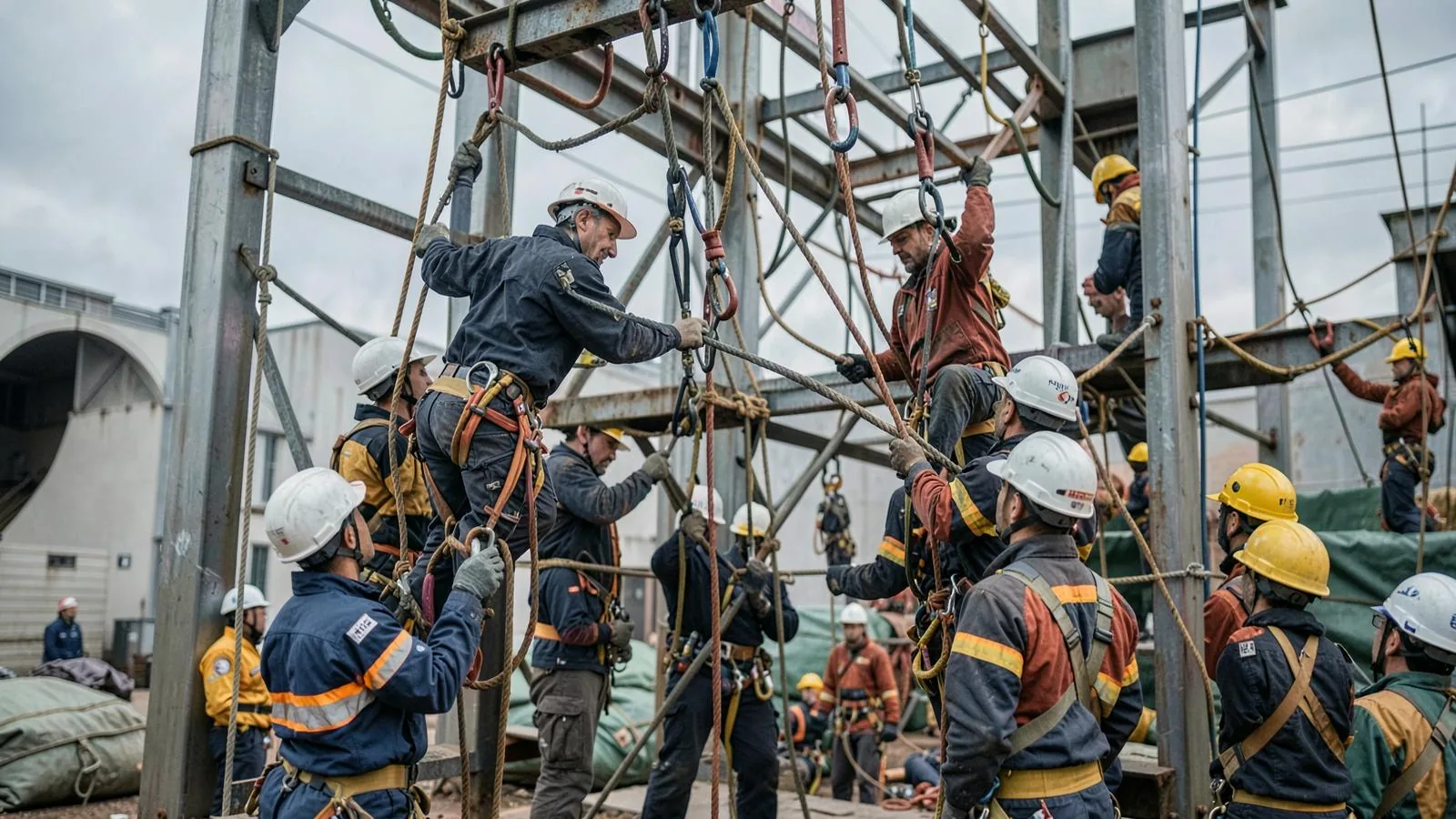
If your project involves trenches, municipal sewer lines, vaults, or storage tanks, your consultant must classify these spaces according to OSHA standard 1926.1200. They handle atmospheric testing protocols, establish lockout/tagout procedures, and design the non-entry or entry rescue plan. For complex spaces with internal obstructions, they coordinate the on-site standby rescue team.
SPRAT Level III Oversight
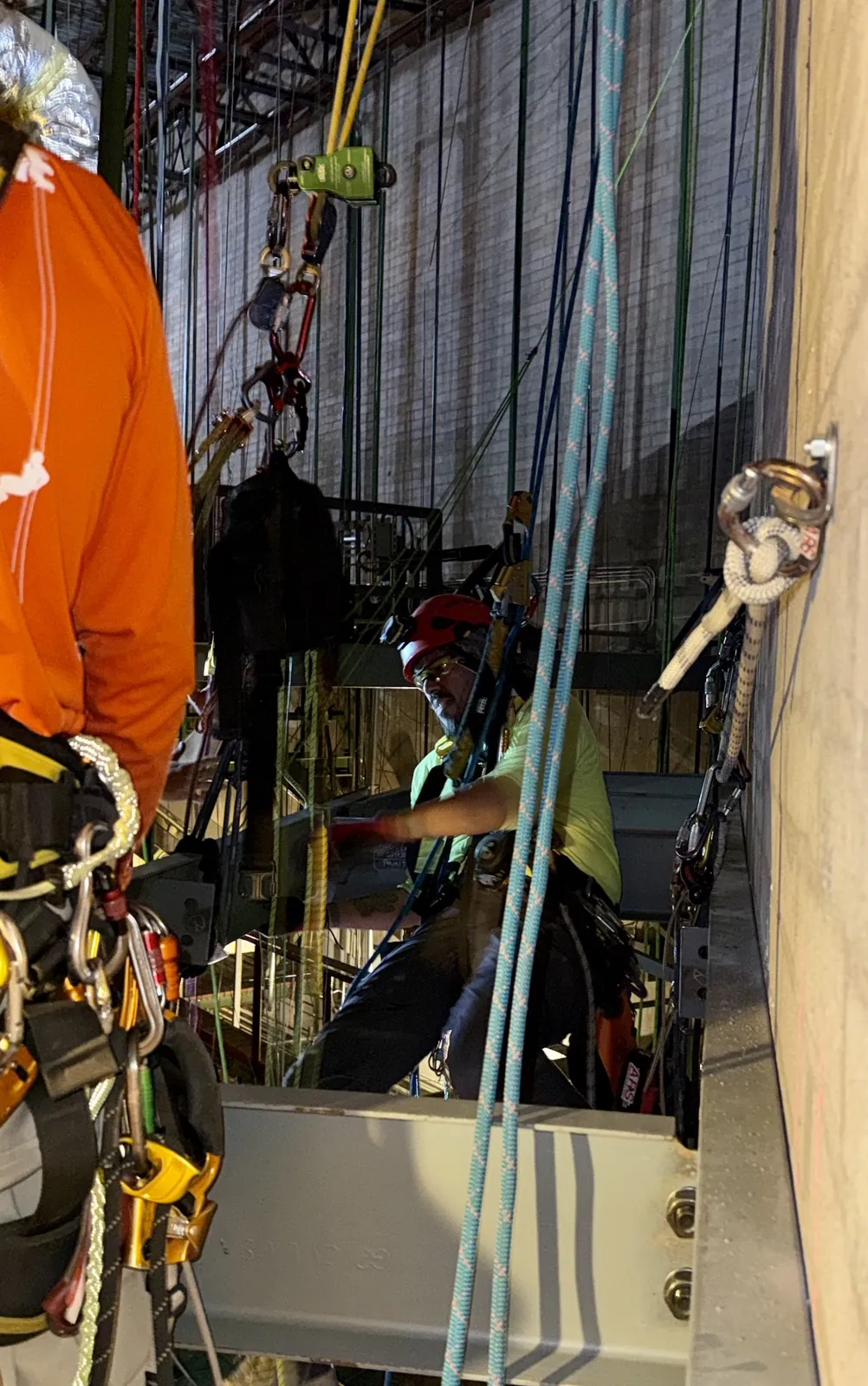
Industrial rope access is becoming common on complex builds where scaffolding or heavy lifts are impractical. If your subcontractors use rope access, you must have a SPRAT Level III supervisor overseeing the operation. A qualified safety consultant provides this specialized oversight. They ensure the rope access technicians use approved dual-rope anchoring systems, inspect the rigging, and follow safe work plans.
Safety Consulting for General Contractors vs. Subcontractors
Safety responsibilities differ depending on your role on the job site. A competent safety consultant adapts their services to fit your exact legal obligations.
General Contractor Responsibilities
As the controlling employer under OSHA regulations, the general contractor holds ultimate responsibility for site safety. A safety consultant helps general contractors establish site-wide safety orientations, manage subcontractor pre-qualification, and conduct weekly all-hands safety meetings. They audit the subcontractors to ensure they follow both federal regulations and the general contractor internal safety policies. If a subcontractor creates a hazard, the consultant documents the violation and requires immediate correction.
Subcontractor Responsibilities
Subcontractors are exposing employers. They must protect their own workers from hazards. A consultant helps subcontractors write their own task-specific hazard analyses, inspect their specialized equipment, and train their crews. If a subcontractor performs high-risk work like structural steel welding or industrial coating, the consultant ensures their specific fall protection and respiratory protection programs meet strict compliance standards.
How to Choose a Construction Safety Consultant
Project managers must vet safety firms rigorously. A bad hire costs you time and money. Follow these criteria to evaluate potential candidates.
Verify Relevant Industry Experience
A consultant who spent their career in light manufacturing will struggle on a fast-paced construction site. You need a professional with a proven background in heavy civil, commercial, or industrial construction. Ask for examples of projects they have managed that match your current scope. They must understand the sequencing of construction trades and the specific hazards introduced during excavation, steel erection, and concrete pouring.
Check Technical Rescue and Access Certifications
Basic OSHA 30 cards are not enough for a lead consultant. Look for advanced credentials. Certified Safety Professionals (CSP) or Construction Health and Safety Technicians (CHST) demonstrate a high level of formal training. If your site involves work at height or confined spaces, verify their rescue certifications. Consultants holding SPRAT Level III certifications possess the highest level of expertise in rope access and high-angle rescue systems.
Assess Site Coverage Capabilities
Your project schedule dictates your safety coverage. If your crews work night shifts or weekends, your consultant must staff the project accordingly. Ask how the firm handles sick days or vacation time for their assigned safety representatives. A professional firm has the depth of staff to guarantee continuous site coverage without interrupting your project timeline.
Breaking Down Project Safety Oversight Costs Arizona
Safety consulting is a hard cost you must build into your bid. Project safety oversight costs arizona contractors vary based on project duration, hazard complexity, and the technical expertise required.
Basic safety audits and walk-throughs typically cost between $500 and $800 per day. These visits include a comprehensive site inspection, a review of daily paperwork, and a written report detailing any OSHA compliance issues.
If you require full-time site safety representation for a standard commercial build, expect to pay $75 to $120 per hour. Long-term contracts lasting six months or more often secure the lower end of this hourly range.
Highly technical projects demand specialized oversight. If your site involves industrial rope access, complex confined space entry, or technical rescue planning, rates range from $125 to $175 per hour. This premium covers the specialized liability, the heavy rescue equipment, and the advanced technical capabilities the consultant brings to the site. Short-term high-risk outages or plant shutdowns often command day rates between $1,200 and $1,800 due to the intensive nature of the work.
Common Mistakes to Avoid When Hiring Safety Consultants
Contractors frequently make preventable errors during the procurement process. Avoid these common pitfalls to ensure you hire a competent safety partner.
Accepting Boilerplate Safety Manuals
Do not pay a consultant to print out a generic corporate safety manual and put your logo on the cover. OSHA compliance officers easily spot copied manuals. Your safety documentation must accurately reflect the specific tools, equipment, and procedures your crews actually use in the field.
Hiring a Safety Cop Instead of a Problem Solver
A bad safety consultant walks the site with a clipboard, writes citations, and shuts down production without offering solutions. A professional safety consultant identifies hazards and immediately works with the superintendent to find a safe way to complete the task. They keep the project moving forward legally and safely.
Ignoring Rescue Planning
Safety consultants often focus entirely on prevention and ignore emergency response. OSHA requires prompt rescue for fall victims and confined space entrants. If your safety consultant does not know how to build a rescue plan or coordinate a standby rescue team, they are leaving you exposed to severe liability.
Secure Your Project Safety Oversight Today
American Rescue and Safety LLC provides expert safety consulting, SPRAT Level III oversight, and rescue planning for contractors in Litchfield Park and across Arizona. We build practical safety programs that keep your crews safe and your projects compliant. Contact our office at 20275 W Exeter Blvd or reach us via email, text, or WhatsApp 24 hours a day to schedule safety oversight for your next project.