When structures sit hundreds of feet in the air or deep inside complex geometry, traditional access methods fail. To bypass the massive delays of scaffolding, facility managers schedule Industrial Rope Access Inspections Arizona relies on for safe, immediate structural evaluations.
Building scaffolding around a 200-foot smokestack takes weeks. It costs tens of thousands of dollars before a single inspector even looks at the structure. Cranes and aerial work platforms require flat ground, massive footprints, and clear vertical paths. They max out at specific heights and cannot navigate tight internal spaces.
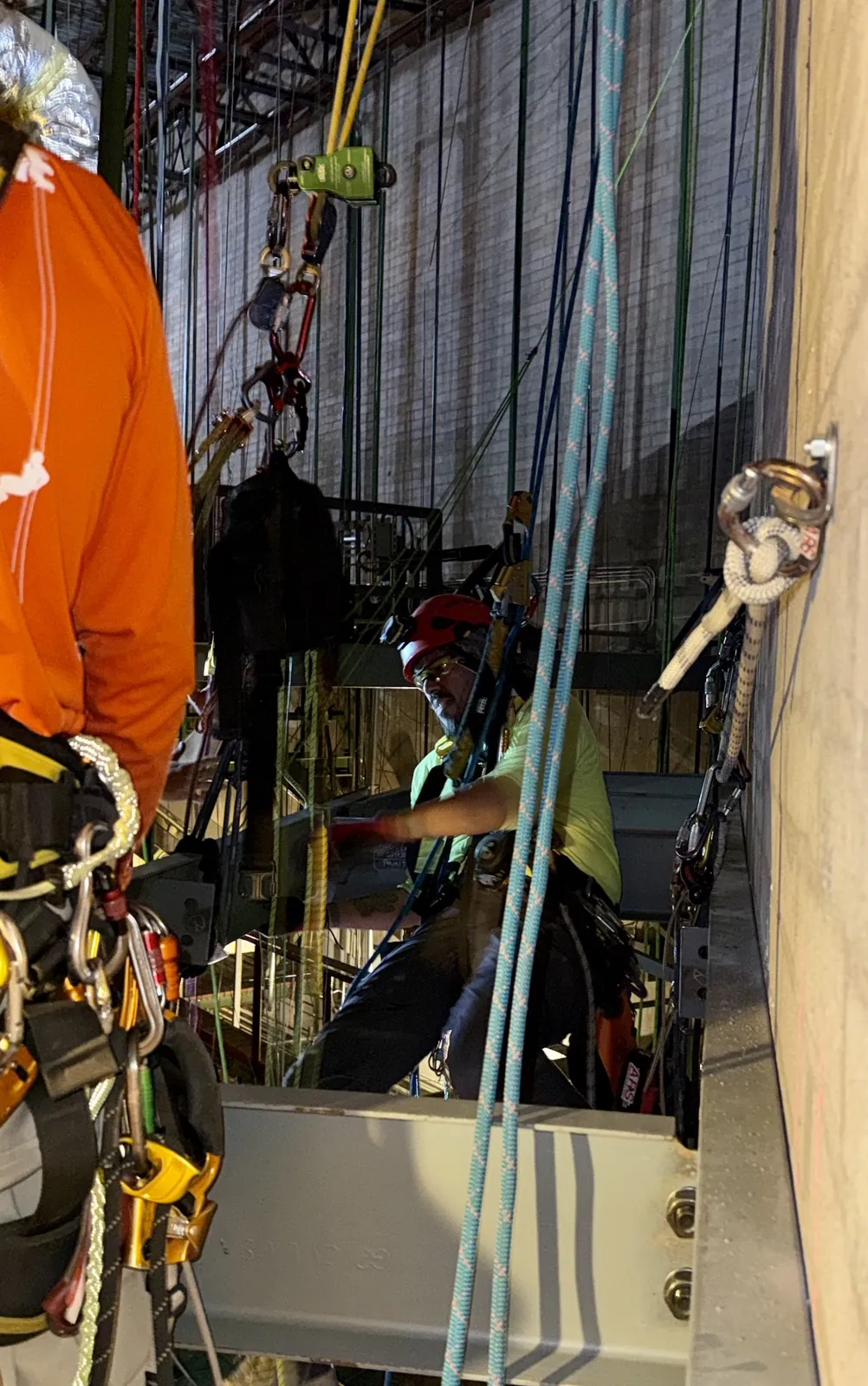
Rope access eliminates these barriers. Technicians use static ropes and specialized hardware to reach difficult locations quickly. A three-person rope access team can rig their lines, complete the inspection, and dismantle their gear in the time it takes a scaffolding crew to unload their trucks. This approach minimizes facility downtime and cuts access costs by up to 70 percent.
When to Schedule Industrial Rope Access Inspections Arizona
Not every job requires ropes. If a standard scissor lift reaches the site safely, use it. You need Industrial Rope Access Arizona teams when specific operational or physical constraints exist at your facility.
Unreachable Heights and Confined Spaces
Wind turbine blades, concrete silos, and municipal water towers present extreme vertical challenges. Internal inspections of pressure vessels or storage tanks often involve manholes too small for standard scaffolding materials to pass through. Rope access technicians anchor to structural steel above the space and rappel directly to the target area.
Active Work Sites
Scaffolding blocks vehicle traffic and halts ground-level operations. Rope access requires a minimal footprint. Technicians rig their anchors at the top of the structure, leaving the ground clear for standard facility operations. Your plant stays online while the inspection occurs overhead.
Emergency Evaluations
When a structure sustains storm damage or shows sudden signs of failure, you cannot wait weeks for a scaffold build. Rope access teams mobilize in hours. They assess the damage, capture high-resolution photos, and provide immediate data so engineers can determine the necessary repairs.
High-Angle Needs in Arizona Industries
Arizona presents unique infrastructure challenges. Extreme heat accelerates material degradation. High desert winds compromise structural integrity. Local industries require frequent, highly specialized evaluations.
Mining Operations
Copper mines and mineral processing plants utilize massive crushers, conveyor systems, and storage silos. The terrain is rugged. Scaffolding is rarely an option in deep open pits or cramped processing facilities. Rope access teams inspect headframes, weld seams on massive tanks, and evaluate rock face stability without disrupting ore processing.
Power Generation
Hydroelectric dams, natural gas plants, and solar towers demand constant maintenance. Technicians rappel down dam faces to inspect concrete spillways. They perform internal inspections of massive boiler tubes to measure wall thickness and detect corrosion. Rope access allows power plants to perform mandatory safety checks during very short scheduled outage windows.
Water Treatment and Storage
Municipalities rely on elevated water towers and deep subterranean pump stations. Assessing the interior coatings of a water tower involves confined space entry and high-angle descent combined. Rope access teams rig above the tank hatch, drop inside, and perform the inspection while fully prepared for an immediate extraction if atmospheric hazards arise.
Core Rope Access Inspection Services
Inspectors hanging from ropes perform the exact same evaluations as those standing on scaffolding. Advanced training allows them to operate heavy equipment and testing tools while suspended. Rope Access Inspection Services incorporate specialized diagnostic tools to provide exact engineering data.
Non-Destructive Testing (NDT)
Visual inspections only catch surface defects. Structural failure usually begins deep inside the metal. Technicians carry advanced NDT equipment on their harnesses to evaluate load-bearing steel.
- Ultrasonic Thickness Gauging: Technicians use sound waves to measure the exact thickness of steel pipes and tank walls. This detects internal corrosion and thinning metal before a catastrophic breach occurs.
- Magnetic Particle Testing: Inspectors apply a magnetic field and iron particles to detect microscopic surface cracks in structural welds.
- Dye Penetrant Inspection: Technicians clean the surface, apply a brightly colored liquid, and use a developer to draw the liquid out of microscopic flaws. This identifies fatigue cracks in non-magnetic materials.
Concrete and Masonry Evaluations
Silos and dams suffer from concrete spalling and rebar corrosion. Rope access teams map out crack propagation. They sound the concrete with hammers to find hollow areas indicating subsurface failure. They also pull core samples for laboratory testing.
Photographic and Video Documentation
Engineers on the ground need clear visuals to write repair specifications. Rope technicians use stabilized 4K cameras and specialized lighting to document structural degradation. They provide live video feeds, allowing the engineer to direct the inspection in real time from a safe location.
The SPRAT Two-Rope Safety System
Industrial rope access operates on a strictly redundant system. Falling is not an option. Reputable contractors strictly follow the Society of Professional Rope Access Technicians (SPRAT) standards.
Every technician uses two distinct rope systems connected to independent anchors. The working line holds the technician's weight and allows vertical movement. The backup line serves as an automatic safety fall arrest system. If the working line fails, or if the main anchor point gives way, the backup line catches the technician instantly.
SPRAT Level III Oversight
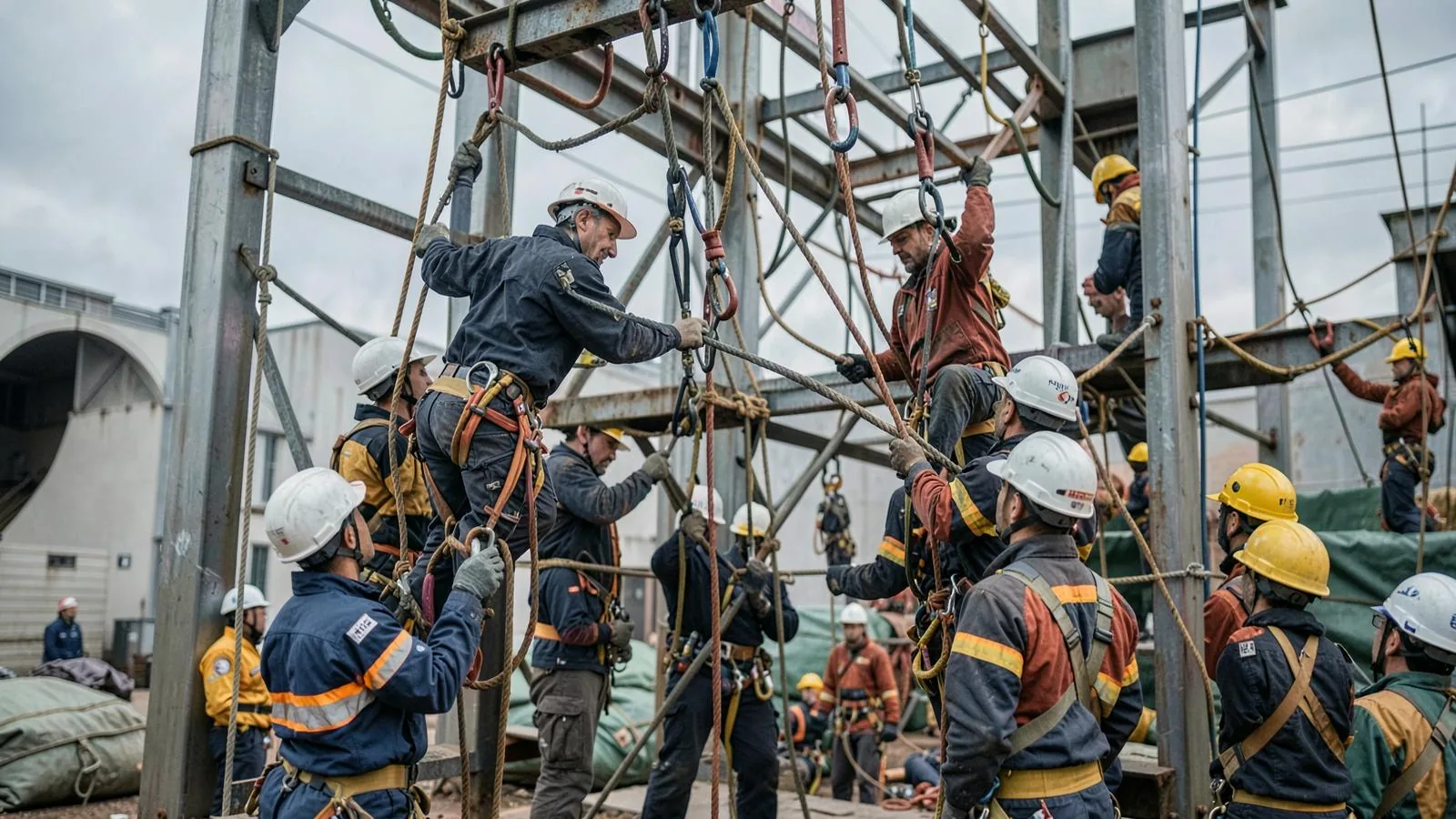
A safe rope access program requires expert supervision. Guidelines require a Level III supervisor on site for complex jobs. This supervisor calculates anchor loads, designs the rigging plan, and oversees all vertical movements. They alone possess the training to manage complex mechanical advantage systems and heavy hauling operations.
Mandatory Rescue Planning for Rope Operations
OSHA forbids any high-angle work without a dedicated, actionable rescue plan. Relying on the local fire department for a mid-air rescue is a massive liability. Most municipal departments lack the highly specialized training and equipment required to execute a pick-off rescue at 200 feet.
A highly qualified rope access contractor brings their own rescue capability. The SPRAT Level III supervisor serves as the dedicated rescue technician. Before anyone goes over the edge, this supervisor builds a rigging system designed specifically to lower an injured worker to the ground in under ten minutes. They stage hauling systems and spare ropes at the anchor point. If a technician suffers a medical emergency or equipment failure, the supervisor instantly switches from oversight to active rescue.
The Cost and Time Comparison
Facility managers must justify inspection budgets. Here is how rope access compares to traditional methods for a standard 100-foot silo inspection.
- Scaffolding: Costs between $15,000 and $30,000 for materials and labor. Erection takes three to five days. Teardown takes two days. The total project spans a week.
- Aerial Lifts: Rentals cost $1,000 to $3,000 per week. Delivery requires heavy transport. The lift needs firm, level ground and a clear path to the silo. Wind conditions frequently halt lift operations entirely.
- Rope Access: Costs typically range from $4,000 to $8,000 depending on the inspection scope. Rigging takes one hour. The inspection takes four hours. Teardown takes one hour. The team completes the entire job in a single shift.
Pre-Job Planning and Permitting
A successful rope access operation begins long before the technicians leave the ground. The host employer and the rope access contractor must coordinate to ensure total site safety.
Anchor Point Verification
Technicians cannot tie off to random pipes or handrails. They require structural anchor points capable of sustaining at least 5,000 pounds of force per person attached. An engineer or a SPRAT Level III supervisor must identify and approve these tie-off locations before work begins. If natural anchors do not exist, the facility must install engineered anchor rings.
Dropped Object Prevention
Tools falling from 100 feet act like projectiles. Rope access teams tether every piece of equipment, from heavy drill motors to small inspection mirrors. The contractor must also establish a controlled drop zone at ground level. This barricaded area prevents unauthorized personnel from walking under the suspended workers.
Schedule Your Rope Access Inspection
Stop wasting maintenance budgets and facility downtime on massive scaffolding builds. American Rescue and Safety provides SPRAT-certified technicians and Level III oversight for complex vertical inspections across Arizona. We specialize in non-destructive testing, concrete evaluation, and difficult access solutions using advanced redundant rope systems.
Call our Litchfield Park office at 20275 W Exeter Blvd to discuss your exact access challenges. You can also reach our team 24 hours a day via email, WhatsApp, or text to request immediate deployment for emergency structural evaluations.