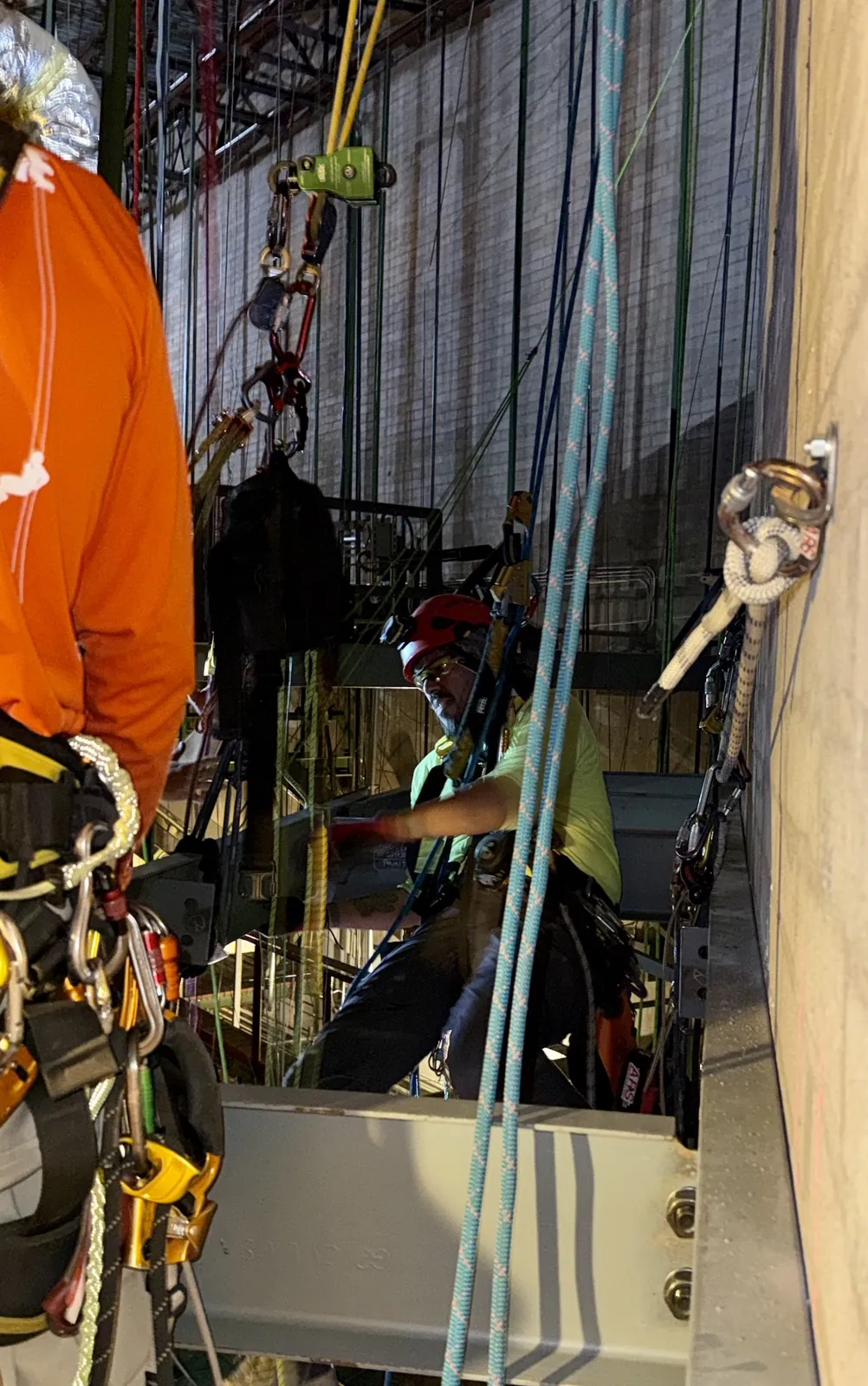

Summer temperatures in Arizona routinely exceed 110 degrees. When you suspend workers from ropes on a steel structure, the ambient temperature is only half the problem. Managing rope access during extreme heat arizona conditions requires precise logistical planning, strict worker monitoring, and modified rescue protocols. Failing to adjust your safety plan for summer weather creates massive liability and puts technicians at immediate risk of fatal heat stroke.
OSHA and the Arizona Division of Occupational Safety and Health (ADOSH) actively enforce heat emphasis programs. Employers face severe citations for failing to protect workers from heat hazards. For rope access operations, compliance means understanding the physics of working at height, modifying daily schedules, and ensuring your standby rescue team is prepared for rapid deployment.
The Physical Toll of Working at Height in Hot Weather
Working on rope requires heavy physical exertion. Ascending, rigging, and maneuvering equipment demand significant energy. This exertion generates internal body heat.
The environment compounds this internal heat. Technicians rarely work in the shade. Steel, concrete, and glass structures reflect solar radiation directly onto the worker. A 110-degree day at ground level easily reaches 130 degrees on the face of a south-facing building or inside an industrial facility without climate control.
Personal protective equipment (PPE) traps that heat. Full-body fall arrest and suspension harnesses cover major arteries in the groin and shoulders. The thick padding restricts airflow and prevents sweat from evaporating. Technicians must also wear helmets, gloves, and protective clothing. This creates a microclimate inside the gear, pushing the worker closer to heat exhaustion with every hour on the ropes.
Equipment Limitations and Hardware Hazards
Arizona heat also affects your rope access equipment. Aluminum and steel hardware left in direct sunlight will reach temperatures capable of causing second-degree burns. Carabiners, descenders, and backup devices become too hot to handle without thick gloves. This heat transfers to the synthetic ropes.
Rope access relies on friction. Descending a rope generates heat inside the descender. On a cool day, the metal device dissipates this heat into the air. On a 115-degree day, the device is already hot before the descent begins. Heavy friction combined with extreme ambient temperatures can glaze the sheath of a static kernmantle rope. Supervisors must enforce slower descent speeds to protect the integrity of the life safety lines.
Adjusting Schedules for Rope Access During Extreme Heat Arizona Operations
You cannot work a standard daytime shift in July. Contractors must shift their operational hours to maintain arizona industrial heat safety standards.
Night Operations
Working from 9:00 PM to 5:00 AM completely avoids direct solar radiation. This is the safest scheduling option for summer rope access. However, night work requires heavy investment in portable lighting. Supervisors must recalculate the risk assessment for dropped objects, sharp edge hazards, and rescue visibility under artificial light.
Early Morning Shifts
If night work is impossible, contractors must implement early morning shifts. Technicians start rigging at 3:00 AM and finish all work on ropes by 10:00 AM before peak temperatures hit.
Work and Rest Cycles
If daytime work is mandatory, supervisors must implement strict work and rest cycles based on the Wet Bulb Globe Temperature (WBGT). The WBGT measures heat stress in direct sunlight by accounting for temperature, humidity, wind speed, and sun angle. When the WBGT reaches critical levels, ADOSH recommends 45 minutes of work followed by 15 minutes of rest. The rest area must be shaded and actively cooled with fans or air conditioning. Taking a break in a hot parking lot does not reduce a worker's core temperature.
Worker Acclimatization Rules
Most heat-related fatalities happen during a worker's first few days on the job. The human body requires time to build a tolerance to extreme heat. OSHA strongly recommends a structured acclimatization program for all new technicians or technicians returning from time off.
Follow the 20 percent rule. On their first day, a technician should only work 20 percent of the normal duration in the heat. Increase their exposure by 20 percent each subsequent day. It takes between seven and 14 days for a worker to become fully acclimatized. Do not put an out-of-state technician on a 300-foot drop in Phoenix on their first day.
Rope Access Heat Stress Prevention and Worker Monitoring
Monitoring workers suspended hundreds of feet in the air is exceptionally difficult. Supervisors on the ground cannot clearly see the faces of their technicians. You must implement aggressive monitoring tactics.
Mandatory Radio Communication
Require verbal check-ins over the radio every 15 minutes. Supervisors must listen for slurred speech, confusion, or delayed responses. Cognitive decline is the first indicator of heat stroke. If a technician forgets basic rigging terminology or makes unusual mistakes, they are suffering from heat stress.
The Buddy System
Technicians must work in pairs with a clear visual line of sight to each other. They are responsible for monitoring their partner for heavy sweating, flushed skin, or sudden pale clamminess.
Pre-Shift Health Screenings
Supervisors must assess their crew before work begins. Ask workers about recent alcohol consumption, which causes dehydration. Verify that technicians are not taking over-the-counter medications like antihistamines, which impair the body's ability to sweat.
Hydration Strategies for Technicians on Rope
OSHA requires employers to provide accessible drinking water. In rope access, accessible means attached directly to the technician. Workers cannot ascend 50 feet just to take a drink.
Technicians working in extreme heat must consume one pint of water per hour. This creates a severe logistical challenge. Carrying enough water for a four-hour drop adds significant weight to the harness. One liter of water weighs 2.2 pounds. A technician carrying a full four-liter hydration bladder adds nearly nine pounds of dead weight. This added weight increases fatigue and alters the Safe Working Load limits of certain tool lanyards.
Tool lanyards and gear loops must safely secure water bottles to prevent dropped objects. Water bottles must have screw-top lids with integrated attachment points.
Plain water is insufficient for long shifts. Heavy sweating drains the body of sodium and potassium. Provide electrolyte replacement drinks to prevent hyponatremia. Technicians should consume electrolytes before getting on rope and carry a mix of water and electrolytes on their harness.
Rescue Readiness During Extreme Heat
Extreme heat drastically shortens the survival window for a suspended worker. If a technician suffers heat syncope (fainting) while on rope, suspension trauma sets in rapidly.
Suspension trauma, or orthostatic intolerance, occurs when blood pools in the legs of an immobile suspended person. The heart struggles to pump blood back to the brain. Heat causes blood vessels to dilate, which accelerates this pooling effect. The cardiovascular strain of heat stress combined with suspension trauma turns a medical emergency into a fatality in minutes.
Standby Rescue Deployment
A standby rescue team must be rigged, briefed, and ready to deploy in under three minutes. In extreme heat, you have zero margin for error. Relying on 911 is a massive liability. Municipal fire departments cannot guarantee the immediate response times required to save a suspended, overheated worker.
Cooling the Rescue Team
You cannot leave your standby rescue team baking in the sun for eight hours. A heat-exhausted rescuer cannot perform a complex SPRAT Level III pick-off. The rescue team must stage in an air-conditioned vehicle or under a shaded canopy with active cooling. They must stay hydrated and maintain a low core body temperature so they have maximum physical capacity when an emergency happens.
Heat-Specific Patient Packaging
Rescue plans must change for hot weather. If you rescue an overheated technician, the rescue litter or sked must not trap more heat against their body. Rescuers must carry chemical cold packs in their response bags. During the descent, the rescuer must apply these cold packs to the patient's neck, armpits, and groin to initiate rapid cooling before they even reach the ground.
Secure Your Job Site with Professional Rescue Services
Heat stress kills quickly. Do not rely on luck or municipal emergency services during an Arizona summer. You need a dedicated, highly trained team watching over your technicians. Contact American Rescue and Safety LLC for your next high-angle project. We provide SPRAT Level III oversight, comprehensive safety consulting, and dedicated standby rescue teams specifically trained for severe weather operations. Call our Litchfield Park office, email us, or send a WhatsApp message 24 hours a day to secure your site and keep your crew safe.