Industrial facilities require routine inspection, maintenance, and repair at height. Facility managers face a choice between building scaffolding or hiring specialized rope technicians. For many sites, industrial rope access Arizona contractors provide a faster, safer, and less expensive alternative to traditional scaffolding. Scaffolding requires heavy materials, days of labor, and a massive ground footprint. Rope access systems use high-strength textile ropes and minimal hardware. This allows technicians to descend into tight spaces or scale massive structures without blocking ground operations. The choice dictates your project budget, safety record, and total facility downtime.
Financial Impact: Industrial Rope Access Arizona vs. Scaffolding
Scaffolding pricing depends on material volume and the hours required for erection and dismantling. Renting scaffolding for a large storage tank or power plant boiler costs tens of thousands of dollars before a single maintenance task begins. You pay for truck deliveries, scaffold builders, weekly rental fees, and the teardown crew.
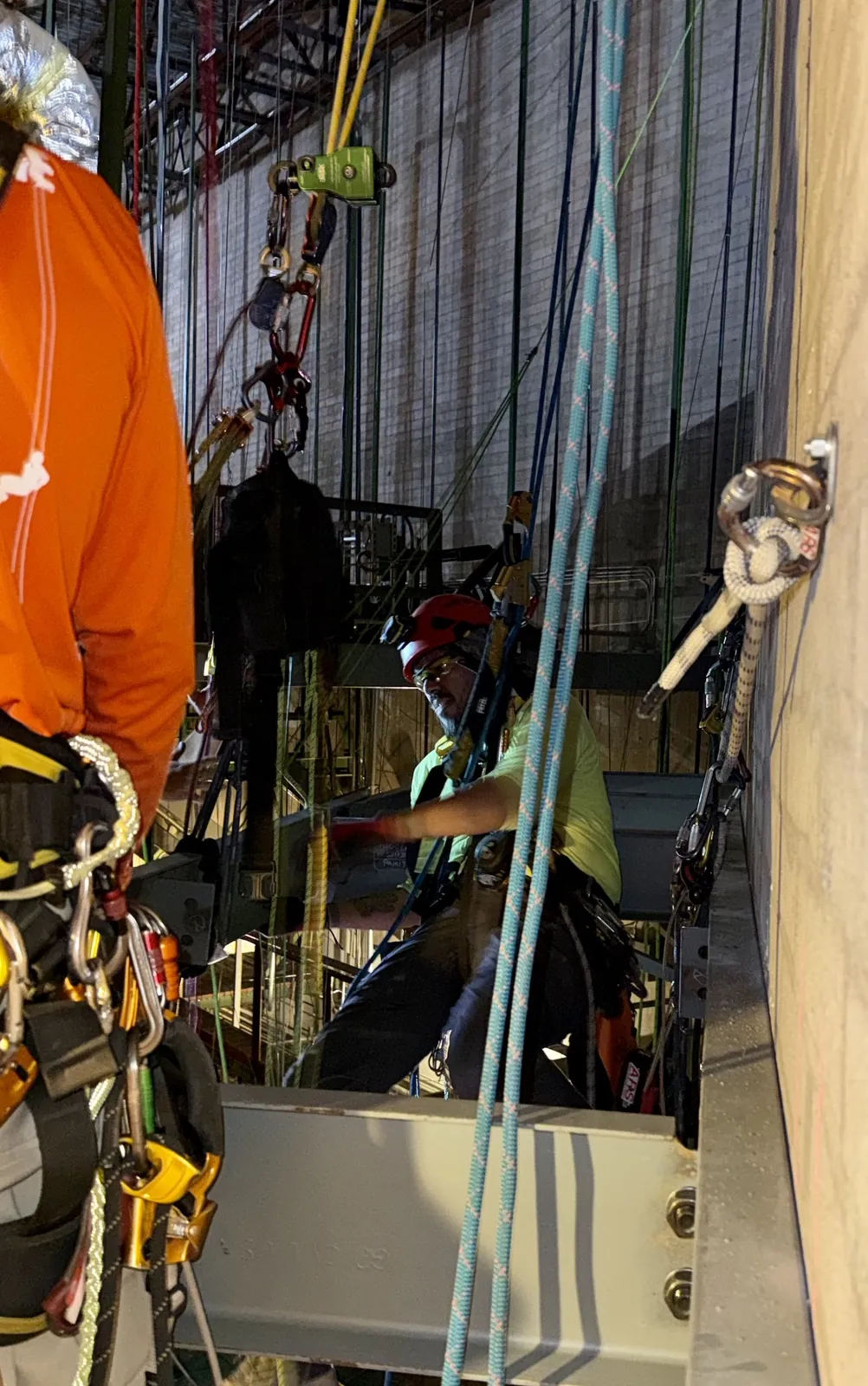
Rope access eliminates the bulk of these fixed costs. The gear fits in the back of a truck. A team of three SPRAT-certified technicians arrives, rigs their anchors in two hours, and begins the actual maintenance work immediately. You pay for specialized labor, not steel tubes and wooden planks. For short-duration projects lasting under two weeks, rope access frequently cuts access costs by 40 to 60 percent.
Evaluating the Safety Records of Both Methods
Many safety managers incorrectly assume scaffolding is safer because it provides a solid walking surface. Data proves otherwise. Scaffolding erection introduces significant fall hazards. Workers must build the platform while exposed to leading edges. Furthermore, scaffolding collapses, dropped objects from platforms, and weather-related structural failures cause hundreds of injuries annually.
Modern rope access operates on a strict two-rope system. The primary rope bears the technician's weight. The secondary rope acts as a fail-safe backup connected to a mobile fall arrester. If the primary line fails, the backup engages instantly.
Hiring professional rope access services Arizona guarantees compliance with SPRAT (Society of Professional Rope Access Technicians) standards. SPRAT requires rigorous training, third-party evaluations, and strict equipment inspection logs. Every technician carries rescue gear and knows how to extract a stranded coworker in minutes. Scaffolding crews rarely have immediate rescue plans in place.
Efficiency and Operational Downtime
Industrial plants measure downtime in dollars per minute. Taking a silo, boiler, or processing tower offline for maintenance halts production.
Building a scaffold structure 100 feet tall takes a crew three to five days. Once the repair is complete, tearing it down takes another two days. That equals an entire week of lost production just for access.
Rope access technicians deploy rapidly. A team can rig an anchor system on a 100-foot silo, descend to patch a leak, and remove their ropes in a single shift. For facilities looking for industrial rope access Phoenix, this speed is critical. Plants in the Valley run on tight margins. Getting a unit back online four days early saves hundreds of thousands of dollars in lost revenue.
Ground Footprint and Site Disruption
Scaffolding consumes ground space. A 50-foot tower requires a wide, stable base. This blocks vehicle traffic, prevents forklift movement, and interferes with other contractors working at ground level. Scaffolding also obstructs emergency escape routes and creates blind spots for heavy machinery operators.
Ropes require zero ground footprint. Technicians anchor to existing structural steel at the top of the facility. They descend to the work area, leaving the ground completely clear. Trucks can continue loading, and plant personnel can walk safely below (provided standard drop zones are barricaded).
Weather Resilience and Wind Loads
Arizona experiences intense monsoon winds. Scaffolding acts like a sail. High winds require you to remove netting, secure loose boards, and sometimes evacuate the structure entirely. If a microburst hits a poorly secured scaffold, it becomes a severe liability.
Rope technicians easily secure themselves against wind. If a sudden storm approaches, technicians simply descend to the ground in minutes, unclip, and wait for the weather to pass. There is no massive structure left behind to blow over.
Environmental Flexibility and Complex Geometries
Industrial facilities rarely feature perfectly flat walls. You must maintain pipe racks, spherical holding tanks, flare stacks, and confined space interiors.
Scaffolding struggles with complex geometry. Building a scaffold around a spherical tank requires complex engineering, custom parts, and massive expense. Building scaffolding inside a confined space is even worse. You must pass every single bar and clamp through a 24-inch manway, creating a logistical bottleneck.
Rope access thrives in complicated spaces. Technicians use advanced rigging techniques to position themselves exactly where the work is required. They perform horizontal traverses under bridge decks, use deviation anchors to pull themselves under overhangs, and drop directly down the center of an industrial smokestack. The rope conforms to the environment.
The Rigging and Anchor Setup Process
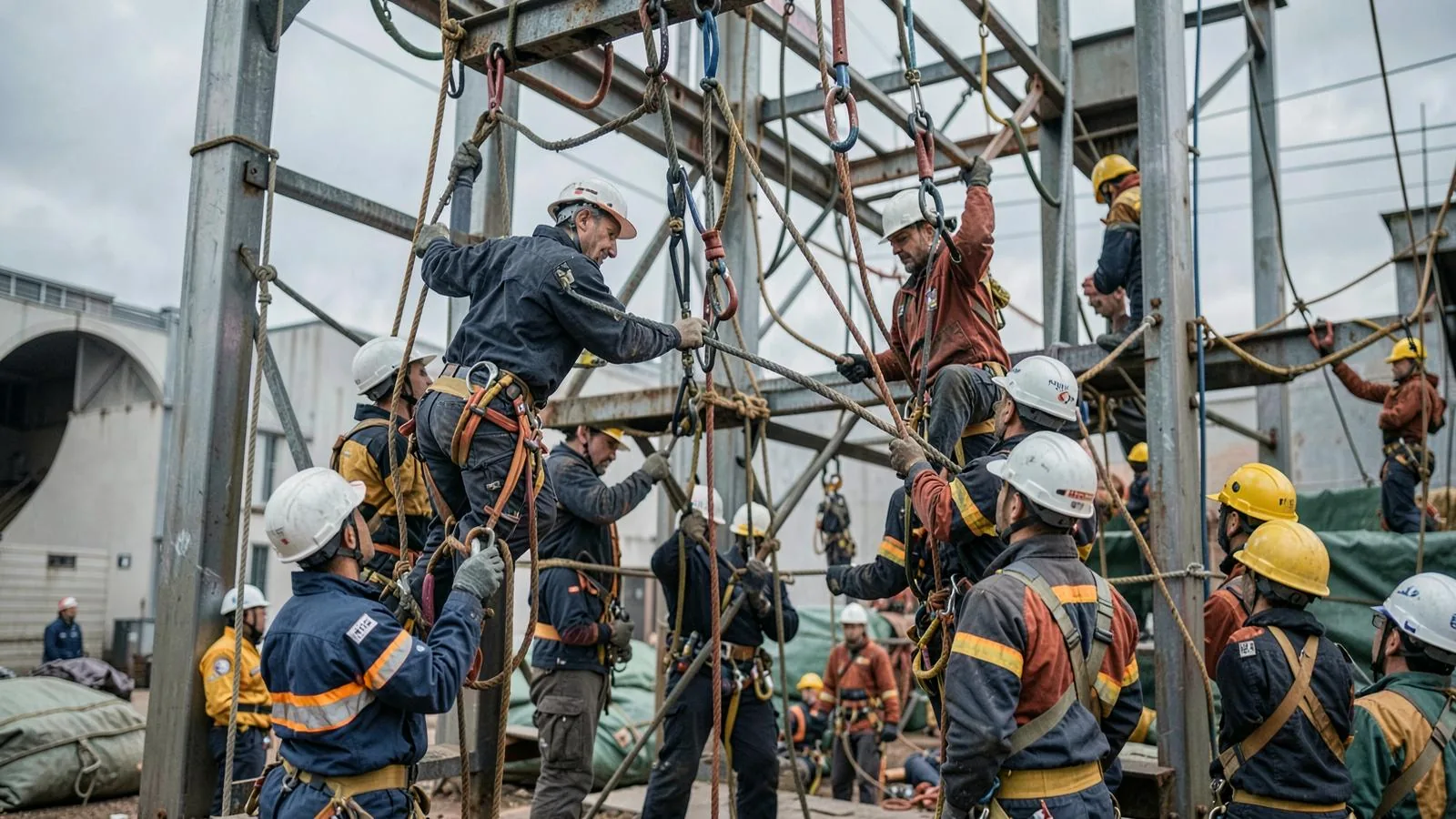
Rope access relies on secure anchors. Technicians do not tie off to random pipes. SPRAT Level III supervisors calculate load limits and select structural steel, certified anchor points, or engineered sling locations. The setup involves independent anchors for the working line and the safety line. Padding protects the ropes from sharp edges. This entire rigging process usually finishes in under two hours. Scaffolding setup involves leveling base plates, stacking frames, installing cross braces, pinning guardrails, and laying toe boards. Every level requires inspection and tagging.
When Scaffolding Remains the Superior Choice
Rope access is not a universal solution for every maintenance task. Certain projects require the rigid platform scaffolding provides. Facility managers must recognize these operational limits.
- Heavy Material Installation: If your project requires installing a 500-pound valve or welding massive steel plates, you need a solid platform. Ropes are designed for human weight and light tools. While technicians can rig hauling systems for materials, scaffolding is better for staging heavy equipment.
- Multiple Trades Working Simultaneously: If a project requires five electricians, three pipefitters, and a QC inspector at the same location, a scaffold platform accommodates them. Rope access limits the work area to the individual technicians hanging on the lines.
- Prolonged, Heavy Tool Usage: Operating a 90-pound jackhammer or heavy abrasive blasting equipment from a rope is physically draining. The recoil pushes the technician away from the wall. For extensive, heavy demolition, scaffolding provides the necessary use and footing.
- Long-Term Construction Projects: If the work area requires daily access for six months, building a scaffold makes sense. The initial setup cost is absorbed by the long-term utility of the platform.
Training and Certification Requirements for Rope Operations
You cannot send a standard maintenance worker over the edge in a recreational climbing harness. OSHA regulations and industry best practices require specialized training.
Technicians must carry SPRAT or IRATA certifications. A SPRAT Level I technician performs work under the direct supervision of a higher-level supervisor. A Level II technician handles more complex rigging and advanced rescues. A Level III supervisor oversees the entire site, signs off on the safety plan, and manages complex emergencies.
When hiring a rope access contractor, demand to see their technicians' logbooks. These logbooks track their hours on rope, the specific tasks performed, and the supervisor's signatures. If a contractor cannot produce SPRAT certifications and updated logbooks, ban them from your site.
Frequently Asked Questions
Is rope access OSHA compliant? Yes. OSHA standard 1910.140 governs fall protection systems, and rope access falls under these guidelines when utilizing a two-rope system. Reputable companies also strictly follow SPRAT Safe Practices for Rope Access Work, which frequently exceeds baseline OSHA requirements.
Can rope access be used inside confined spaces? Yes. Rope access is highly effective for confined space entry and standby rescue. Technicians can rig high-point anchors to lower themselves into silos or tanks where scaffolding will not fit.
How much weight can a rope access system hold? Industrial static kernmantle ropes typically have a breaking strength exceeding 6,000 pounds. Anchors are rigged to support a minimum of 5,000 pounds per attached worker. The system easily supports a technician, their gear, and a potential rescue load.
Do rope technicians provide their own tools? Professional rope access contractors supply their own access gear, harnesses, and rigging hardware. For specific maintenance tasks like non-destructive testing (NDT), welding, or painting, the contractor usually provides the necessary specialized tools as part of the service contract.
Secure Your Next High-Angle Maintenance Project
Choosing between scaffolding and rope access requires analyzing your project timeline, budget, and site constraints. For rapid deployment, zero ground footprint, and minimal downtime, rope access is the clear choice.
American Rescue and Safety LLC provides specialized industrial rope access, confined space rescue, and safety consulting across Arizona and the Southwest. Our SPRAT Level III supervisors ensure total compliance and project safety.
Contact our Litchfield Park, AZ office at 20275 W EXETER BLVD to discuss your next maintenance project. We are open Monday through Friday from 8 am to 6 pm, and Saturday and Sunday from 10 am to 4 pm. For emergency project needs, we are available 24 hours a day via email, WhatsApp, and text message. Visit ARSRopeSafety.com to request a site evaluation.